


“Hearing is a form of touch. You feel it through your body, and sometimes it almost hits your face” _ Evelyn Glennie, profoundly deaf percussionist
In our last post, we traced the origin of sound, before ears, before listeners, when vibrations told stories in silence. Now we continue that journey, stepping into a time when humanity began to listen more deeply. Not just with the ear, but with the heart.
This is the story of how we tried, and often struggled, to bring sound back to those who had lost it.
Why did We Begin Inventing Ways to Hear Again?
Because sound is life.
We don’t invent to cure silence; we invent to restore connection. A voice, a laugh, a whispered “I love you.” These aren’t just sounds, they are bridges to belonging. When someone loses their hearing, they don’t just lose audio; they risk losing conversation, music, warnings, stories… the thread of community.
So early inventors, doctors, tinkerers, and even family members tried to build those bridges again.
The Age of Ear Trumpets: Crude, Clever, and Full of Care

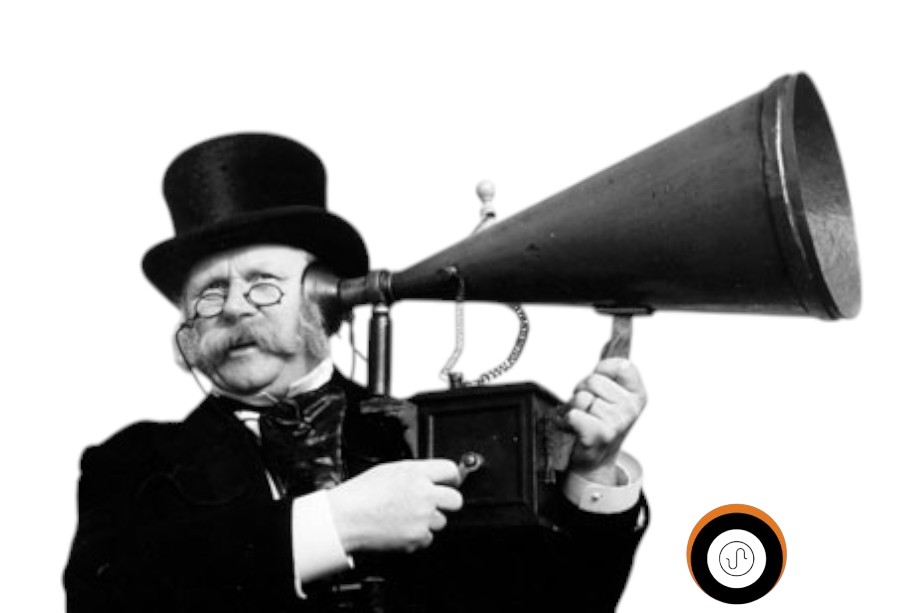
Before electricity, the only way to amplify sound was to shape it.
Enter the ear trumpet, a funnel-shaped device designed to collect sound waves and channel them into the ear. Made from metal, wood, or even animal horns, these were the first assistive hearing devices in history. They didn’t amplify sound electronically, they just gathered more of it.
They were awkward. They were limited. But they were born of empathy.
Imagine someone at a dinner table, unable to join in the laughter. Now imagine handing them a device that brings that joy a little closer.
Notable figures like Ludwig van Beethoven reportedly used variations of the ear trumpet. It didn’t save his hearing, but it gave him moments of closeness to the music he loved.
The Leap to Electric: A New Era Begins
The invention of the telephone in the late 1800s sparked something big: if sound could travel through wires, why couldn’t it be amplified?
By the early 1900s, inventors had created the carbon hearing aid, using a microphone, battery, and earphone. It was bulky and required a table to operate, but it worked.
Next came the vacuum tube hearing aid in the 1920s and 30s. These devices were the size of a lunchbox, not exactly pocket-friendly but they brought new clarity to the user.
Then in the 1950s, a revolution: transistors. Smaller, more efficient, and more portable. For the first time, people could wear their hearing aids discreetly in a pocket, on a belt, or even behind the ear.
These weren’t just scientific milestones, they were emotional ones. Each step forward allowed someone to return to a world they feared was slipping away.
Hearing in Hiding: The Silent Stigma


But hearing loss didn’t only affect the ears; it affected identity.
For centuries, deafness was misunderstood. People were seen as “less,” and their silence was mistaken for unintelligence or disconnection. As a result, early hearing aids were often hidden or disguised in hats, canes, or clothing.
Society told people to be quiet about their hearing loss. Technology, on the other hand, tried to help them speak again.
The inventions were imperfect. But the intent was always clear: to help people rejoin the conversation.
What These Inventions Reveal About Us
These early tools from crude cones to transistor-powered devices weren’t just about physics or medicine. They were about love. About not giving up. About refusing to let someone disappear into silence.
They show us that sound is more than a physical wave, it’s a human right. A way to be present. A way to matter.
From Then to Now and Beyond


Today’s hearing aids are smart, sleek, and even AI-powered. But none of them would exist without the humble, hopeful inventions that came before.
This journey, from trumpets to transistors, shows us one thing clearly:
The desire to restore sound has always been rooted in a deeper desire: to restore belonging.
Recap for Readers:
- Hearing loss sparked the earliest audio inventions, driven by empathy and social need.
- Ear trumpets marked the first efforts to “catch” sound naturally.
- Electric hearing aids in the 20th century paved the way for modern audiology tech.
- Stigma often shaped how devices were designed and worn.
- These early tools helped reconnect people with the world, emotionally and socially.
Coming Next:
In our next post, we’ll explore the fundamentals of sound and hearing, from frequency and decibels to how the human ear perceives the world. Stay tuned.
And remember: « sound is not just what we hear. It’s how we feel, connect, and live.«